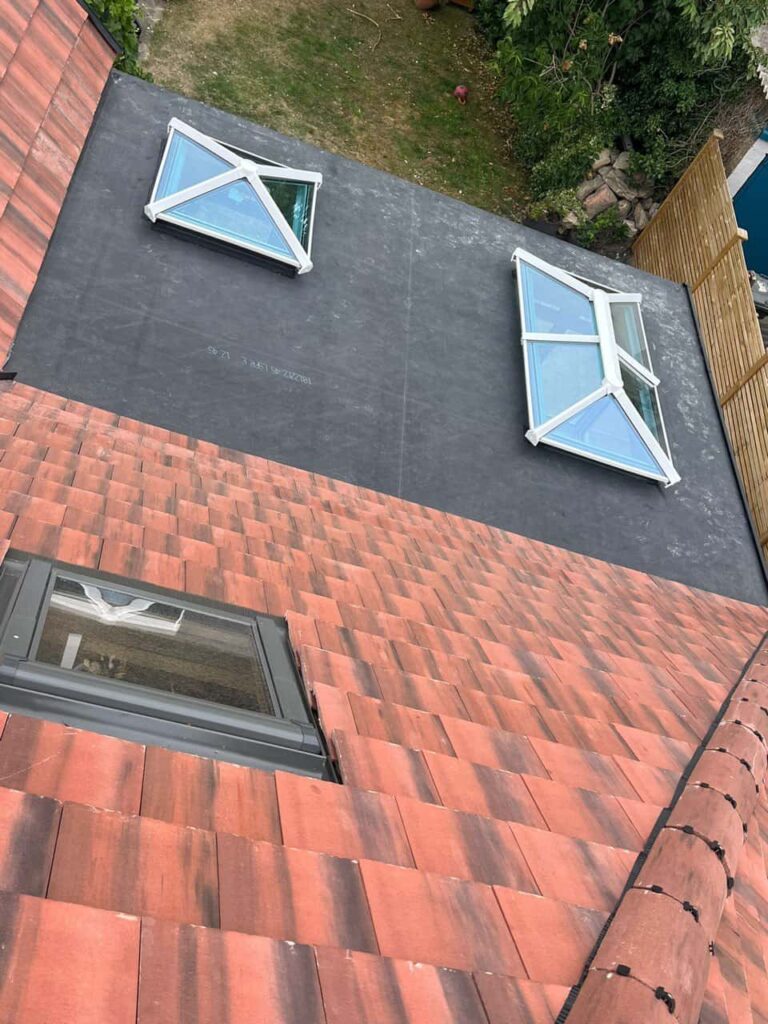
Roofing felt is widely used on flat and low-pitched roofs because it forms a continuous weather-resistant covering. Although modern felt systems are designed for durability, constant exposure to sunlight, temperature changes, moisture and movement gradually affects the material.
A felt roof becoming brittle, cracked or torn does not always mean that complete replacement is immediately necessary. The position, extent and cause of the damage must first be identified. For property owners in Horley, Surrey, an early professional inspection can help prevent a small surface defect from allowing moisture to affect the layers beneath.
What Causes Felt Roofing to Deteriorate?
Felt roofing works as part of a complete system that includes the surface membrane, bonded layers, supporting deck, joints, drainage details and perimeter finishes. A defect in any of these areas can place additional strain on the covering.
Understanding why the felt has failed is essential. Repairing only the visible split may provide limited results if movement, trapped moisture or poor drainage remains beneath it.
Long-Term Exposure to Sunlight
Sunlight gradually affects the bituminous compounds within traditional roofing felt. Prolonged ultraviolet exposure can dry the surface and reduce its flexibility, leaving it less able to accommodate movement.
The material may begin to look faded, rough or crazed before larger cracks develop. Areas receiving uninterrupted sunlight can sometimes deteriorate faster than shaded sections of the same roof.
Repeated Expansion and Contraction
Roofing materials expand as temperatures rise and contract as they fall. Felt is designed to tolerate a degree of this movement, but repeated cycles can eventually place stress on joints, edges and areas where the membrane is tightly fixed.
Once the felt has lost some flexibility through ageing, it becomes more vulnerable to splitting. Cracks often appear around upstands, corners, outlets and changes in the roof structure because movement is concentrated at these points.
Standing Water and Ineffective Drainage
A flat roof should be formed to direct water towards suitable outlets. If water remains in depressions after rainfall, it can expose certain sections of felt to prolonged moisture and additional temperature stress.
Ponding may develop because of blocked outlets, inadequate falls or movement in the supporting deck. Treating surface damage without correcting the drainage problem can allow deterioration to return.
Signs that drainage requires attention include:
- Water remaining well after rainfall
- Debris gathering around outlets
- Dark or damp-looking sections
- Localised sagging
- Repeated repairs in low areas
A professional inspection should establish why the water is collecting before remedial work is planned.
Movement in the Roof Deck
The felt relies on a stable supporting surface. If the roof deck flexes, swells or deteriorates, the movement can stretch the covering above it.
This may create cracks, raised joints or tears that follow the lines of the boards beneath. In such cases, repairing the membrane alone will not correct the underlying weakness. The affected deck may also need attention to provide a sound base for the roofing system.
Blisters and Trapped Moisture
Blisters form when air or moisture becomes trapped beneath the felt and expands. They can appear as raised bubbles or larger swollen sections of the roof.
An intact blister may not leak immediately, but it creates a vulnerable area that can crack under continued movement or accidental pressure. Cutting or puncturing it without understanding the cause may allow water into the roofing layers.
The extent of blistering and the condition of the surrounding felt should be assessed before deciding on a repair.
Damage From Foot Traffic or Falling Objects
Felt can be punctured or torn by sharp objects, displaced materials and unnecessary foot traffic. This is particularly likely when the membrane has already become brittle with age.
Work on nearby roof features may also damage the covering if equipment is placed directly onto it. Even a small puncture can permit moisture to enter, so any suspected impact damage should be checked promptly.
Weak Joints, Edges and Upstands
The most vulnerable parts of a felt roof are often its details rather than the main open surface. Seams, perimeter edges, outlets and upstands must remain properly bonded and sealed.
Over time, these areas may lift, shrink or separate. Wind and water can then act on the exposed edge, enlarging what began as a minor defect. Careful repair of the detailing is necessary to restore continuity across the roof covering.
Moss, Leaves and General Debris
Leaves and organic debris can obstruct outlets and retain moisture against the surface. Moss may also conceal cracks or lifted joints, making deterioration more difficult to identify.
Removing debris carefully and keeping drainage routes clear supports the performance of the roof. Harsh scraping or unsuitable cleaning methods should be avoided because they can damage an ageing felt surface.
Can Brittle or Cracked Felt Be Repaired?
Localised damage may be repairable when the surrounding felt remains flexible, securely bonded and generally sound. A targeted repair could be appropriate for an isolated tear, open joint or small damaged section.
More extensive work may be needed when:
- Cracking is widespread
- The felt has become brittle across most of the roof
- Blisters affect several areas
- Water has reached the deck
- Joints and edges are failing repeatedly
- Previous repairs are no longer holding
- The roof surface has become uneven
The decision should be based on the condition of the entire system rather than the appearance of one visible defect.
Why a Professional Inspection Matters
Water entering through felt roofing does not always appear directly beneath the damaged area. It can travel between layers or along the roof deck before becoming visible inside the property.
A professional inspection should examine the membrane, joints, drainage, perimeter details and supporting deck where accessible. This helps distinguish an isolated surface defect from wider deterioration and allows the repair to address the actual cause.
Conclusion
Felt roofing becomes brittle, cracked or torn because of ageing, sunlight, temperature movement, standing water, deck instability and physical damage. Defects around joints, outlets and edges are particularly important because they can allow moisture beneath the covering.
Horley Roofing Repairs provides professional felt roof inspections and repairs in Horley, Surrey. If your felt roof is showing cracks, splits, blisters or lifted joints, contact us to arrange an assessment and determine the most suitable way to restore the affected area.
Call us on: 01293 222 197
Click here to find out more about Horley Roofing Repairs
Click here to complete our contact form and see how we can help with your roofing needs.