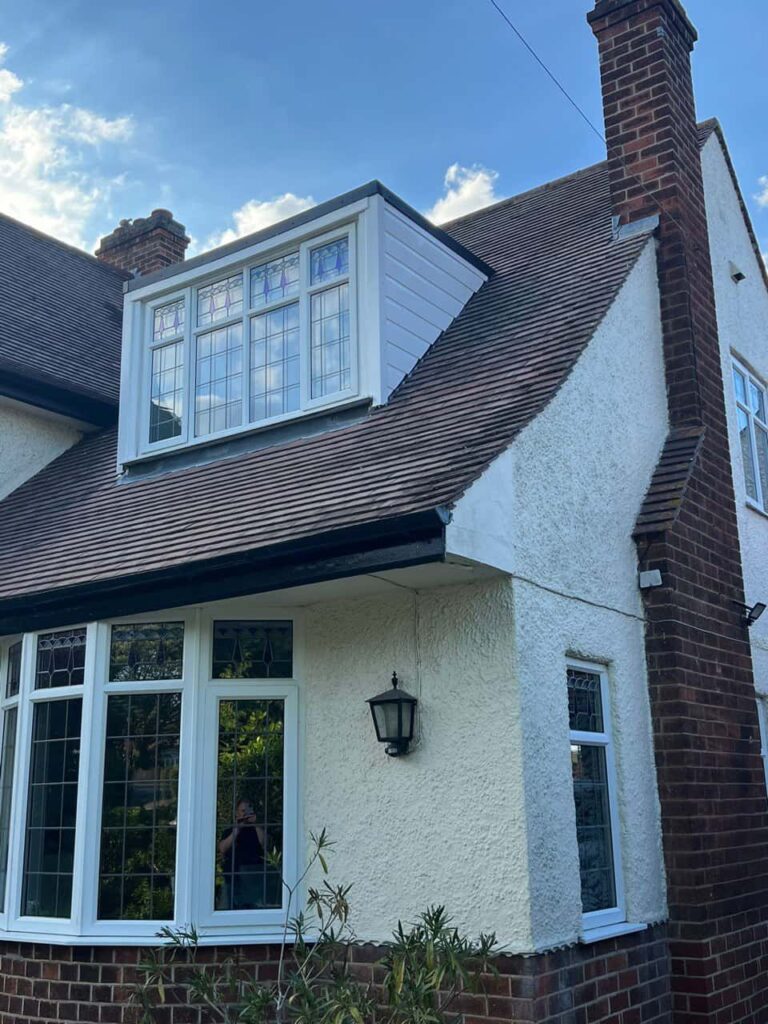
Lead flashing plays a critical role in protecting your roof from water ingress. Positioned around chimneys, valleys, dormers and roof junctions, it forms a watertight seal between different roofing elements. When properly installed, lead flashing is highly durable. However, like any roofing component, it can deteriorate over time.
At Horley Roofing Repairs, we regularly inspect and repair lead flashing on properties across Horley, Surrey. Understanding the causes of deterioration helps homeowners recognise early warning signs and prevent more serious roofing problems.
Natural Ageing and Weather Exposure
Lead is a long-lasting material, but constant exposure to the elements gradually affects its condition. In Horley, Surrey, roofs are exposed to:
- Persistent rainfall
- Seasonal temperature changes
- Frost and thaw cycles
- Wind-driven debris
Over many years, expansion and contraction caused by temperature changes can weaken joints and fixings. Although lead is flexible, repeated movement may eventually cause splits or fatigue cracking.
Poor Installation Practices
Incorrect installation is one of the most common causes of premature lead flashing failure. If flashing is not installed with proper allowances for thermal movement, it may:
- Split at stress points
- Pull away from masonry
- Develop cracks along folds
Additionally, flashing that is cut into mortar joints incorrectly or secured inadequately can loosen over time. Professional fitting ensures that lead is shaped, dressed and secured correctly to accommodate movement.
Inadequate Support Beneath the Lead
Lead flashing should always be supported by a stable surface. If the substrate beneath it deteriorates or was poorly prepared, the lead may sag or become distorted.
Common underlying issues include:
- Crumbling mortar
- Damaged brickwork
- Rotting timber in adjoining areas
When the structure beneath shifts or weakens, the flashing loses its secure base and may begin to fail.
Corrosion and Environmental Factors
While lead is resistant to many environmental influences, certain conditions can accelerate wear. Contact with incompatible materials, such as some modern sealants or metals, may cause chemical reactions that weaken the lead.
Air pollution and persistent moisture can also contribute to gradual surface degradation. Over time, this may reduce the flashing’s ability to form a watertight seal.
Physical Damage
Lead flashing can be damaged by:
- Falling branches
- Foot traffic during roof access
- Accidental impact during maintenance work
Even minor tears or distortions can allow water to penetrate roof junctions. Because flashing is often located at critical transition points, damage in these areas should be addressed promptly.
Lack of Regular Roof Inspections
Lead flashing issues often develop gradually and may go unnoticed without routine inspections. Small cracks or lifted edges can allow moisture to enter behind the flashing, leading to hidden water damage.
Regular professional inspections help identify early signs of:
- Lifting or separation
- Surface cracking
- Failing mortar joints
- Water staining near roof junctions
Addressing these issues early prevents more extensive roofing concerns.
Why Prompt Repairs Matter
When lead flashing deteriorates, water can penetrate around chimneys, valleys and abutments. These areas are naturally vulnerable, and once compromised, they may cause:
- Internal damp patches
- Damage to roof timbers
- Gradual structural weakening
Timely professional repair restores the watertight seal and protects the integrity of the roof system.
Professional Lead Flashing Repairs in Horley, Surrey
At Horley Roofing Repairs, we provide detailed roof assessments and expert lead flashing repairs for properties throughout Horley, Surrey. Our approach focuses on correct installation techniques, careful workmanship and long-term durability.
Whether flashing has cracked due to age, lifted because of poor installation or deteriorated through environmental exposure, we ensure that repairs are completed to a high standard and fully integrated with the surrounding roof structure.
Conclusion
Lead flashing can deteriorate due to natural ageing, poor installation, inadequate support, environmental factors or physical damage. Because it protects some of the most vulnerable parts of your roof, any sign of deterioration should be taken seriously.
If you suspect issues with lead flashing on your property in Horley, Surrey, contacting Horley Roofing Repairs for a professional inspection is the most reliable way to safeguard your roof and prevent further damage. Early intervention helps maintain long-term performance and structural stability.
Call us on: 01293 222 197
Click here to find out more about Horley Roofing Repairs
Click here to complete our contact form and see how we can help with your roofing needs.